
Trauma-Informed Therapy in Toronto & Mississauga
Some experiences stay with you long after they're over. Our South Asian therapists offer trauma-informed therapy, in person in Mississauga or online across Ontario, at a pace that feels safe for you.
Trauma isn't only one big event. It can come from:
Childhood and family experiences
Painful or unsafe relationships
A sudden loss
An accident
Growing up with constant criticism, pressure or fear
What brings people to trauma therapy
Signs trauma might still be affecting you
Trauma shows up differently for everyone. You might notice:
Flashbacks or nightmares
Difficulty trusting others
Feeling emotionally numb or shut down
Always being on guard (hypervigilance)
Strong emotional reactions to certain triggers
If any of this sounds familiar, therapy can help.

Childhood and intergenerational trauma in South Asian families
In many South Asian families, trauma isn't named as trauma. It can look like:
Emotional or verbal abuse
Unrealistic expectations and pressure to be perfect
Not being allowed to make your own decisions
Not being able to get outside support for your mental health
Guilt-tripping
Feeling responsible for your parents' happiness and wellbeing
Struggling to set boundaries
Anxiety over choices that go against your family's beliefs or values
Emotional suppression and not being able to talk openly at home
Intergenerational trauma can also leave you struggling with your identity, caught between two cultures. As South Asian women raised in Canada, we understand these patterns from the inside. You won't have to explain your family or your culture to us.
Why People Across Ontario Trust The Therapy Couch
Since 2023, we've supported 300+ clients, most of them South Asian women working through family pressure, marriage, boundaries and burnout. Every therapist on our team is a South Asian woman who understands the balance you're trying to find.
300+ clients supported since 2023
We have many years of experience as therapists
Registered Psychotherapists and RPs (Qualifying) with the College of Registered Psychotherapists of Ontario (CRPO)
Evening and weekend sessions to fit around work and family
The right fit matters. If it doesn't feel right, you can switch to another therapist on our team.
Sliding-scale fees with every therapist
We serve clients across Ontario, online. Whether you're in Toronto, Mississauga, Oakville, Markham, Burlington, Milton, Ajax, Whitby or Pickering, you can meet with us by secure video from wherever you feel comfortable.

Trauma can leave behind fear, shame, a sense of abandonment and a disconnect from your body. EFT works on the mind-body connection. Together we:
Build safety and emotional awareness first
Gently explore core painful memories, when you're ready
Reduce fear, self-blame and shame
Turn stuck emotions into healthier responses, such as healthy anger or grief
Emotion-Focused Therapy (EFT)
How we work with trauma
Narrative therapy
Narrative therapy separates you from the problem. You are not your trauma. Together we:
Look at where your beliefs about yourself came from, and how much control they have over who you are today
Find the exceptions: times you survived, protected yourself or stood by your values
Use those moments of strength to rewrite a fuller story about your life
What trauma-informed means in our sessions
Trauma-informed therapy puts your safety and your choice first. In practice, that means:
We check in before going deeper. We'll always ask if you're comfortable before exploring something painful.
You can pause anytime, as often as you need.
You can change the topic. If something feels like too much, we'll follow your lead.
We help you leave grounded. We often end with a grounding activity, so you don't walk out of a session feeling raw.
Your sessions are one-on-one. Trauma work happens just between you and your therapist.
How long does it take?
It depends on you and what you've been through. Some people work through a specific experience in less than a couple of months; others take longer. Most clients come weekly or every two weeks. You decide how often, not us.
We're not a crisis service. If you're in immediate danger, call 911 or the 988 Suicide Crisis Helpline (call or text 988).
Trauma-informed, and honest about fit
We are trauma-informed therapists. Trauma is not our only focus, but we know how to work with it safely. If we feel another approach would help you more, such as EMDR or specialized care for severe PTSD, we will refer you to someone outside our clinic who specializes in it. Getting you the right care matters more to us than keeping you.

Frequently Asked Questions
-
No. We start by building safety. You decide what you share and when.
-
Therapy that understands how trauma affects your mind, body and relationships, and puts your safety and choice first.
-
Yes. Ongoing criticism, pressure, guilt or emotional neglect can leave a lasting impact.
-
Yes. All of our therapists see clients online across Ontario. Sukhmeet also sees clients in person in Mississauga.
-
We're not a crisis service. If you're in immediate danger, call 911 or the 988 Suicide Crisis Helpline.
-
Patterns of pain, fear and coping passed down through families, often shaping expectations, communication and identity.
-
No. If EMDR would suit you better, we'll refer you to someone who offers it.
-
Yes. All of our therapists see clients online across Ontario. Sukhmeet also sees clients in person in Mississauga.
-
It depends on you and what you've been through. It could be less than a couple of months, or longer. Most clients come weekly or every two weeks, and you choose the frequency.
-
No. Trauma work with us is one-on-one, between you and your therapist.
Our Step-By-Step Therapy Process
Step 1: Reach Out
Book online, submit a form or call (416)-710-1381. Tell us a little about what's going on, in your relationship or with family, friends, or work and whether you're coming as a couple or on your own.
Step 2: The Free 15-Minute Consult
We'll talk about what's going on. In your relationship or with family, friends, or work and answer your questions. No pressure, no commitment.
Step 3: Your First Session
We'll explore what's bringing you in, the patterns you keep running into, and what you want to change. Together, we'll set clear goals for your work.
Step 4: Ongoing Sessions
Sessions are virtual, from anywhere in Ontario. We use an integrative approach to help you reach your goals, working on what's underneath the conflict and giving you practical tools to use between sessions. Book and manage appointments through our Client Portal.
Step 5: Moving Forward
Every journey is different. Some clients feel relief within a few months; others choose longer-term therapy to keep growing. You decide the pace.
Meet the Clinicians
-

Maryum Rahman-Registered Psychotherapist, MA.
Languages: Hindi and Urdu
Offers virtual therapy
Works with: Individuals and Couples
Specialties: Anxiety, family issues, marriage counselling and depression
-
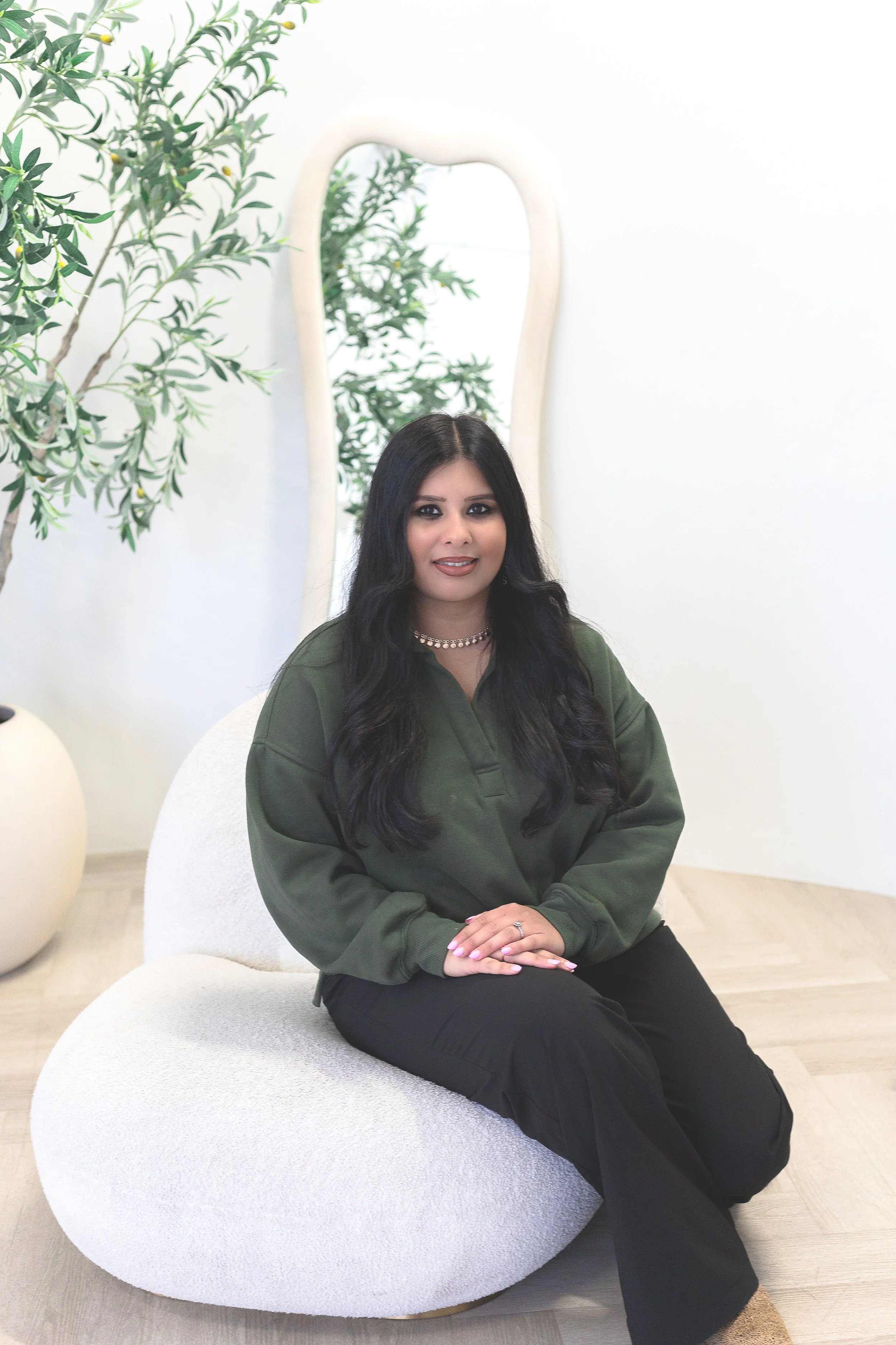
Rida Ahmad-Registered Psychotherapist (Qualifying), MA
Languages: Hindi and Urdu
Offers virtual therapy
Works with: Individuals
Specialties: anxiety, self doubt, caregiver burnout, depression and postpartum mothers
-

Sukhmeet Brar Registered Psychotherapist (Qualifying), MACP
Languages: Hindi and Punjabi
Offers virtual therapy and In person
Works with: Individuals
Specialties: anxiety, family issues, depression, low self esteem, and burnout
-

Alia Siddiqi Registered Psychotherapist, MC
Languages: Hindi and Urdu
Offers virtual therapy
Works with: Individuals and Couples
Specialties: Life transitions, burnout, family issues, depression and anxiety
How to Get Started?
Start with a free consultation. Ask your questions and see if we’re the right fit. Book online with the Book a Free Consult button below, or send us a message using the form.
Other ways to connect with us:
Call us: (416)-710-1381

Email us: admin@therapycouch.ca